
Rules and regulations for Members
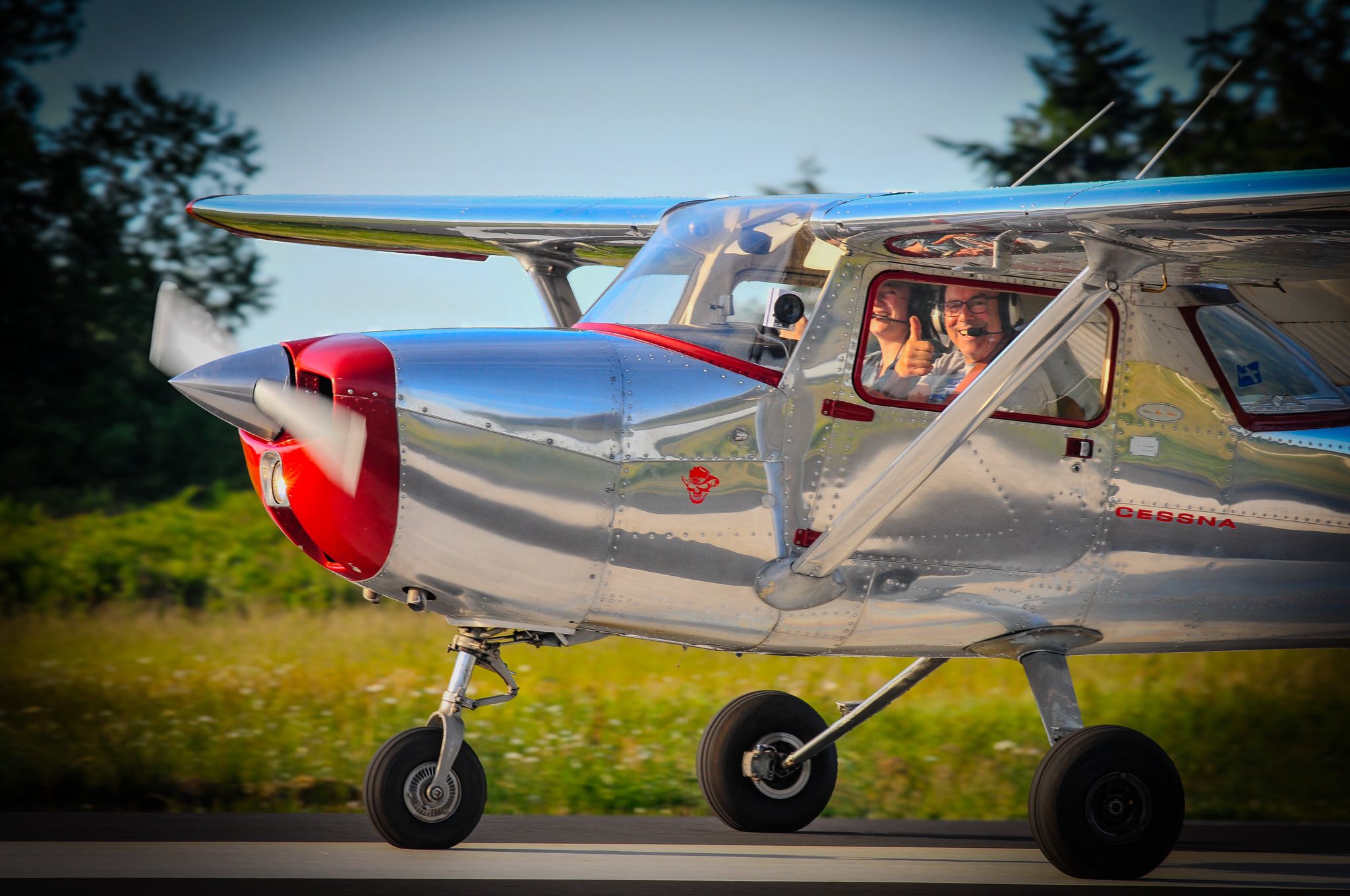 Oak Harbor Flight Club
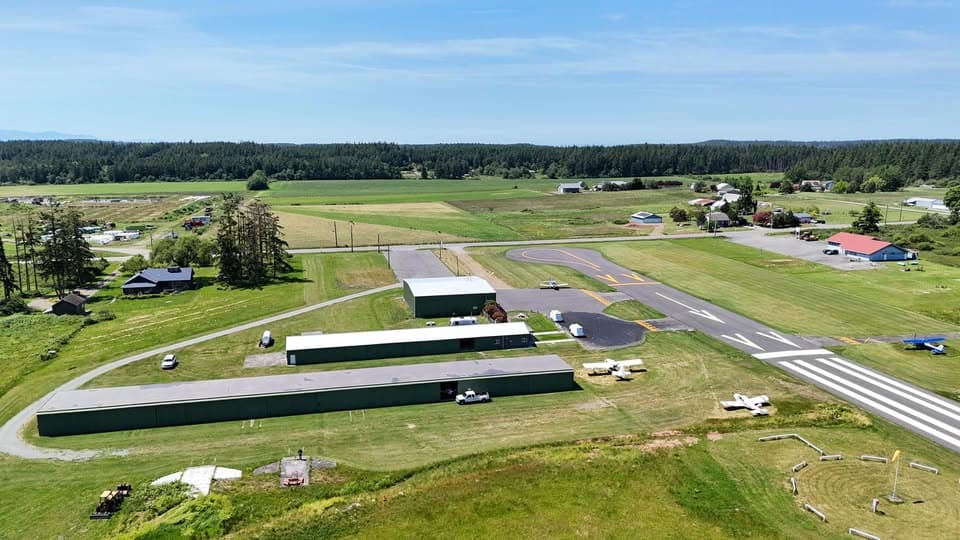
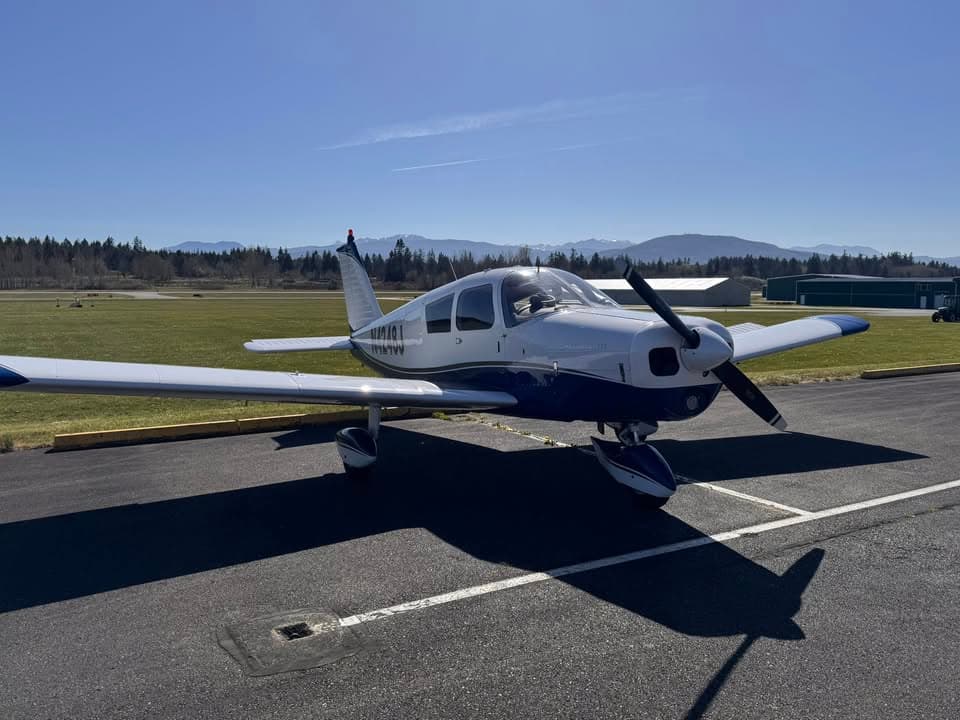

Rules for Flight Operations Oak Harbor Flight Club (OHFC) Oak Harbor, Washington
Revision 1 - July 22, 2026
I. RESPONSIBILITY
The Member agrees to be responsible for all damage that is not covered by insurance and that is caused by his or her operation of the aircraft or by his or her carelessness or negligence in flying, parking, servicing, or securing the aircraft or by any other acts that may make the Club liable. The OHFC bylaws define in Article XII - “Liability and Damage to Aircraft” determine the extent to which a member is financially liable.
II. ELIGIBILITY TO OPERATE AIRCRAFT
A. Membership and Payment of Fees Initiation fee must be paid in advance of using club aircraft. Dues and flight fees will be billed near the beginning of each month and are due by the 15th. A person who is delinquent by 30 days is NOT eligible to fly.
B. Current Flight Status
- All pilots MUST complete a Club checkout prior to flying a Club aircraft. In addition to covering ground topics such as club procedures, hangar operations, fueling options, etc., all pilots must complete an aircraft checkout form (open book test) and conduct a checkout flight in each make/model of Club aircraft with a Club approved instructor. Upon successful checkout, supporting documents must be uploaded to the designated online location.
- All pilots MUST maintain currency requirements in accordance with FAR 61.56 and 61.57 in order to be eligible to fly and to fly with a passenger(s) onboard.
- All pilots must maintain a current medical certificate (or BasicMed) and all supporting documents must be uploaded to the designated online location. When club records show a member to be out of FAA medical that member will not be permitted to schedule club aircraft until the required copies have been received by the MMAC board and uploaded to the designated online location.
- All pilots MUST complete an annual questionnaire on flight experience annually at the beginning of each Club business cycle (or insurance cycle). Failure to return the annual questionnaire within the allowed time will automatically restrict the pilot from future flights until the questionnaire is returned in its completed form. This is required information for insurance renewal.
C. Club Currency Requirements
- No member shall operate a club aircraft who has not acted as PIC in that specific club aircraft within the preceding 120 days.
- Members who have not maintained club currency shall have a check flight with a club approved flight instructor.
- Members who have not maintained club currency within the previous 12 calendar months will have their membership terminated. The member can petition the board for a waiver in extenuating circumstances.
III. SCHEDULING AIRCRAFT
A. All aircraft are scheduled through the on-line scheduling system. The service is available 24 hours a day, seven days a week. When a new membership application with fees is received and approved, a OHFC Administrator will add the new member’s name to the list of authorized users, will assign a password and notify the new member of the user name and password. You must be on the schedule to use the aircraft. Use the comments section of your reservation to inform others:
- If there might be a possibility of cancellation.
- Where you are going if not “local” or pattern work.
B. Scheduling as an alternate is available with the on-line scheduler. If the aircraft is scheduled during the time you want to use it, you may schedule as an alternate in the event the current scheduled user cancels his/her flight. However, it is recommended to contact the member scheduling at the desired time and ask that you be notified in the event of a cancellation.
C. A member may not schedule more than three flights in advance. There is no limit as to how far in advance you may schedule except as follows:
- A member may schedule only one flight that exceeds two days in duration more than one week in advance of the departure date. An additional trip may be scheduled one week or less before the planned departure date.
- A member must obtain approval from a member of the Board of Directors to schedule a trip of 3 (three) days or more in duration.
- Scheduled flights must be canceled prior to the reservation time if the member decides not to fly. Furthermore, it is the responsibility of the person canceling the aircraft to notify any known alternates (III.B above) of the cancellation.
- A member taking a FAA flight test has priority for use of the aircraft and may “bump” other members off the schedule. Reasonable effort should be made to schedule flight tests when the aircraft is available and not interfere with other member’s plans.
- If there are any conflicts in flight scheduling or aircraft operations contact a member of the board or administrator of the online scheduling tool.
- Members with less than 150 hours total time who are planning cross country flights over 250 NM from the airplane home base (i.e. P52) are required to review their proposed flight with a flight instructor.
IV. MINIMUM FEES FOR FLIGHT RESERVATIONS
A. Members will be charged for the actual tach time the aircraft is used or the minimum daily charge, whichever is greater. The minimum daily charge is computed as follows:
- Two hours for each reservation of 5 hours or more.
- For multi-day reservations, a minimum charge of 2 hours per day. Actual tach time on these trips is used as a credit toward minimum hours, if required.
- Any delay beyond the scheduled return date, which is for safety reasons (weather, aircraft repairs, etc.), will not be assessed.
V. BASIC OPERATION RULES
A. A member must abide by all applicable laws and regulations (Federal, State and local.)
B. Club aircrafts are not to be operated outside the 48 contiguous United States without the written authorization of the OHFC board and the aircraft owner(s).
C. Aircraft are to be returned on time unless delayed to ensure safety. In that case, the member must assure that the schedule is changed per the rules in Section III before the aircraft is due to be returned and as much in advance as possible. The member must also notify, or arrange for someone to notify, any other members affected by this schedule change.
D. All pilots must do preflight and post-flight inspections of the aircraft. Any discrepancies should be recorded in the squawk log in the airplane and also be recorded as a squawk on the online scheduling system. A OHFC board member and maintenance officer should also be notified. For any discrepancy that grounds the aircraft, update the schedule and notify any scheduled pilots who will be affected. If airplane is grounded, post the red “GROUNDED” sign in a visible location inside the airplane.
E. Maximum wind speeds for takeoff and landing: No more than 30 knot wind in any direction including reported/forecasted gusts. Pilots shall treat the maximum demonstrated crosswind component as documented in the Aircraft Flight Manual or Pilot’s Operating Handbook as a limitation (including reported/forecasted gusts). Any limitation will be qualified by your personal minimums and proficiency.
F. Do not place anything on the on the glare shield or close to the windshield, to ensure the windshield is not scratched.
G. Fuel should be purchased using the supplied “100LL Only” charge card located in the airplane. If fuel is purchased otherwise a receipt should be sent to the treasurer for credit to your member account.
H. All pilots must service the aircraft after each flight. Servicing includes gas to the standard fuel load, check oil level, check tire condition, clean interior (remove garbage or papers, stow lap and shoulder belts, etc.), clean the windows, remove dirt (bugs, mud, etc.) from all leading edges (wings, tail, struts and propeller). Non-compliance will result in loss of flying privileges. Privileges can be re-established only by the OHFC board of directors. If you wish to have an aircraft fueled to less than standard load make arrangements with the pilot scheduled before you.
I. If pets or animals are carried in the aircraft the pet must be in a carrier or kennel and the pilot is responsible for returning a clean aircraft. Keep in mind that others may have pet allergies.
J. No smoking or vaping in or around the airplane or in airplane hangar.
K. Club airplanes must be locked when parked and unattended outside of the club hangar.
L. Use tie downs whenever aircraft are unattended, not in a hangar, and meteorological conditions may present a hazard to the aircraft. If unsure, tie the aircraft down.
M. Land only at FAA approved fields, except in an emergency.
N. A VFR or IFR flight plan is recommended for all flights of more than 100 NM. Flight plans and use of flight following are recommended for all “cross country” flights. Do not forget to close flight plans.
O. To avoid damage, a pilot or properly briefed passenger shall walk all unfamiliar non-paved taxi areas prior to taxiing.
P. Hangar Operations
- If you are the last person leaving the hangar, turn off all lights and lock the door.
- Use caution opening or closing the hangar door to avoid damaging aircraft.
- Do not leave an unattended hangar without closing and securing all doors.
- Avoid directing aircraft slipstream into an open hangar.
- Clean uncontaminated fuel samples should be emptied into the aircraft fuel tank.
- The aircraft will be chocked while in the hangar.
- Return any supplies or equipment used to service aircraft to their assigned storage area.
- Empty trash cans when full or when they contain food and might attract pests.
VI. REQUIRED REPAIRS AT OTHER THAN HOME BASE
If an aircraft requires repair to be airworthy while away from home base, reasonable effort should be made to contact the maintenance officer or an OHFC board member. If neither can not be contacted, members may authorize required maintenance estimated not to exceed $300 and will be reimbursed by the owner(s). If repairs are estimated to exceed $300, prior permission must be received from the maintenance officer or aircraft owner(s). If neither can be reached, contact an OHFC board member.
VII. RULES FOR WINTER FLIGHT OPERATIONS
A. AIRCRAFT PRE-HEAT. If aircraft has an engine heater…. owner will supply instructions as to use of heater for cold weather operations.
B. If aircraft has a winterization kit (baffles) owner will install and deinstall baffles as needed for cold weather operations.
C. COLD WEATHER RESTRICTIONS TO FLIGHT OPERATIONS
- Ensure that aircraft are properly defrosted before flight. Do not use car window scrapers on the aircraft windows or metal, they scratch easily. If the aircraft is tied down outside while away from home base ensure that all snow and frost is removed and that control surfaces move freely. If available the club recommends having the aircraft stored in a heated hanger or in a place where the engine heater, if installed, can be plugged in and the engine cowling covered the night before your return flight.
- No touch & go landings when the temperature is below 15°F. The sudden addition of power causes excessive wear and may damage the engine. Instead, full stop landings with taxi back to runway departure end should be the procedure when the temperature is below 15°F, as the taxi time allows the engine to recover heat that is not achieved with the cooling airflow during aircraft flight.
- When the temperature is below 15°F, minimize rapid power changes during maneuver and stall practice. Typical procedure is to gradually reduce power and maintain a minimum RPM to maintain engine temperature.
D. GENERAL GUIDELINES
- Aircraft are normally hangared at ambient temperatures so the club does not supply deicer fluid or fuel anti-ice additives. If you determine that such items are required while away from home base use only materials which are approved for aviation use. Refer to the owner’s manual and/or seek the advice of a competent mechanic or airplane owner(s).
- Be sure that pilot and all passengers are appropriately dressed for the weather. Remember that you may be standing outside for some time in case of an off-airport emergency landing or diversion. Bring a wool blanket if available.
VIII: Disclaimer
In the event of any discrepancy between this document and the Bylaws, the Bylaws supersede this document.
THANK YOU FOR MAKING OAK HARBOR FLIGHT CLUB A GREAT PLACE TO FLY!
By signing below and initialing each page of the Operating Rules, Member acknowledges receipt of bylaws and agrees to follow all stipulations therein.
Member Signature_______________________________________________
Member Name (please print) _______________________________________